


January 07 : 2026
Janet Gustin
In "Ouch," Janet captures a fleeting yet precious moment that reflects the boundless selflessness of motherhood, while the use of black and white distills the image into something deeply moving.
by Lily Fierman

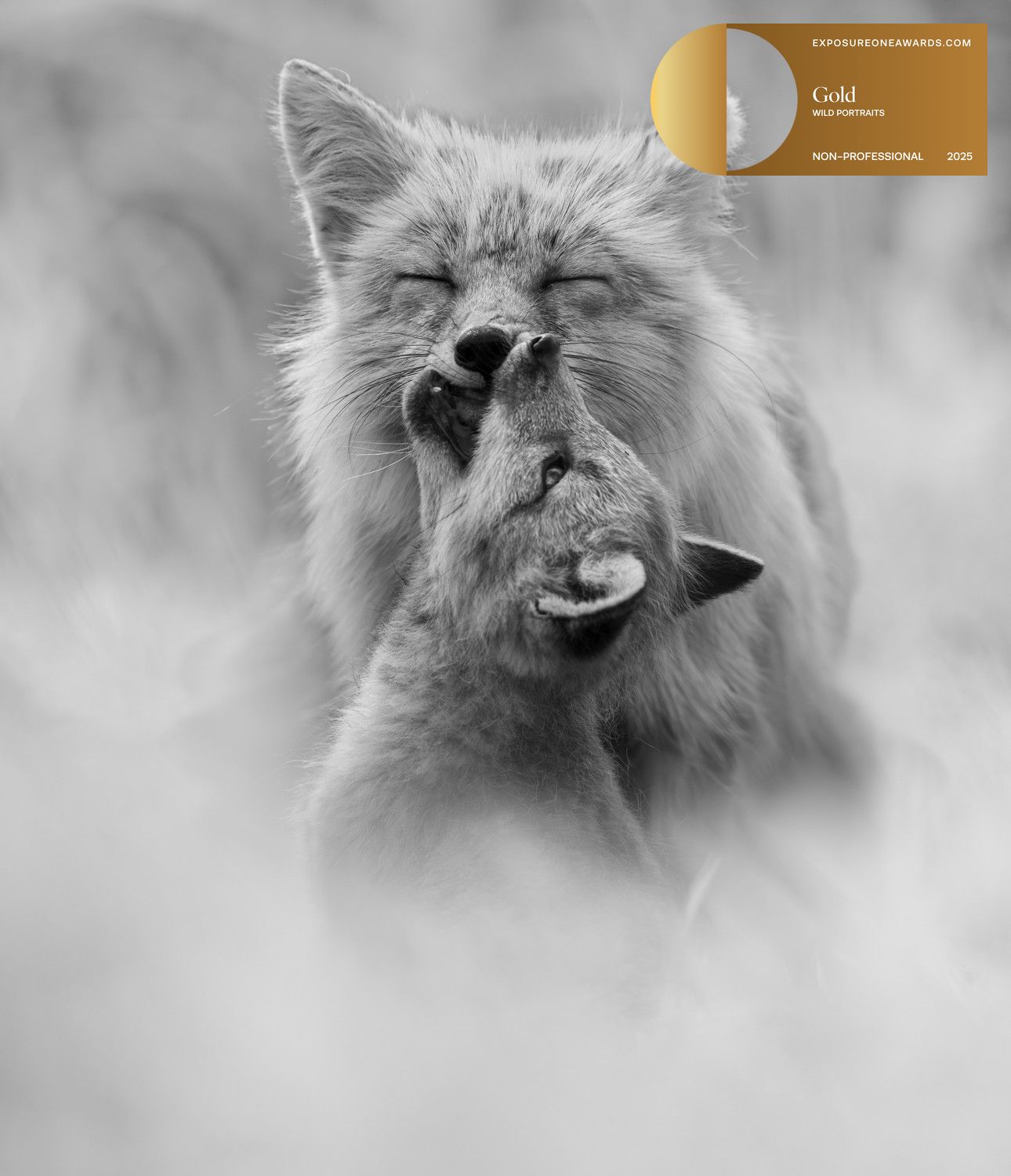
Image: Ouch
Q:
Can you please tell us more about creating your winning image, “Ouch!”?
A:
This was actually my first time ever seeing and photographing foxes and their kits, which made the experience even more magical and unexpected. I was incredibly fortunate to witness and document this intimate family moment between a mother fox and her kits. What struck me most was how universal the scene felt—it could have been any family anywhere, with siblings vying for attention and a mother navigating the beautiful chaos of it all.
In the second image (below), you can see the tenderness that exists in quieter moments: one kit sharing a peaceful connection with their mother while she continues nursing the others. There's such grace in how she multitasks, offering individual attention even while caring for the whole family.
But the winning photograph captures something equally true about motherhood and family dynamics. Just as one kit enjoys that tender moment, a sibling decides now is the time to demand attention—and does so by biting mom's nose! You can see her instinctive response in that squint, that unmistakable "ouch" expression. Yet what moves me most is what she doesn't do: she doesn't pull away, doesn't scold or reject. She simply endures, with the patience and selfless love that defines motherhood across species.
It's a perfect metaphor for family life—the way attention and affection must be shared, the way some personalities demand more, and the way a mother's love somehow expands to meet every need, even when it literally hurts. That moment of maternal devotion, captured in a split second, reminds us that true love often means staying present even in uncomfortable moments.


Image: Contentment
Q:
Since it seems your primarily work in color, why work in black and white here? Is this your first foray into the palette?
A:
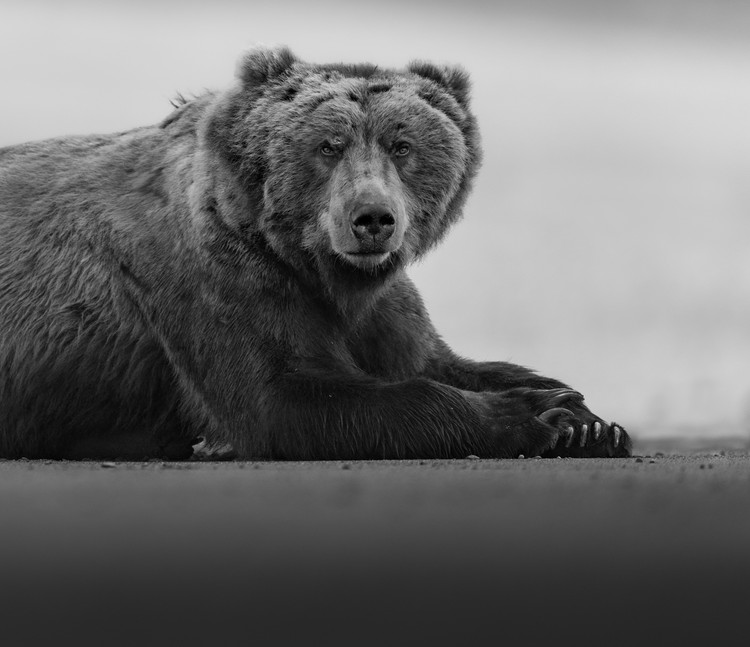
This is actually my first time working in black and white. For me, B&W editing is very different from color work, and I entered this competition without any confidence in my ability. But what I've come to appreciate most about black and white is how it lends a timeless feel to the moment. It removes the distractions of the background and draws the viewer directly to the heart of the story—standing still but still living. Some of the best fine art wildlife photographs are in black and white, and now I have a greater understanding as to why.
Knowing that I actually won an award, I realize that this is an area I don't want to just dabble in—I truly desire to try to excel in black and white photography.
Yet what moves me most is what she [the mother] doesn't do: she doesn't pull away, doesn't scold or reject. She simply endures, with the patience and selfless love that defines motherhood across species.
Q:
What do you feel are the differences between black and white and color, specifically when it comes to your photography practice?
A:
I'll be honest—I'm still discovering the answer to this question with my very limited experience in black and white. But what I'm learning is that B&W lends itself to drama through low key lighting or a dreamy feel with high key tones. The details seem more distinct, uninhibited by the many different colors of our natural surroundings.
At first, I gravitated toward color because I wanted to bring the vibrancy and emotion of living color into the viewer's experience. But now I'm realizing that black and white images aren't truly colorless—they invite the viewer's imagination to participate in the process, whether that means mentally filling in the colors or simply resting in the simplicity of the monochromatic palette. In a way, black and white creates space for a more personal connection, where each viewer can bring their own interpretation to the image.
Q:
What is your dream subject?
A:
Photography is still fairly new to me, so I'm still experiencing the thrill of each new species. My passion for wildlife started with photographing humpback whales and has expanded to foxes, bald eagles, lions, and bears. Oh, the bears—the coastal brown bears of Alaska have found a permanent place in my heart. I find myself counting down the days until my next encounter with them. But high on my dream list would be to photograph the penguins in the Falkland Islands.
Q:
What are you working on now?
A:
I'm still sorting through thousands of photos taken just this past year. As I continue studying and learning more about photography, I'm discovering treasures that I didn't even realize I had buried on my SSD's. As I go through my photos, I'm beginning to recognize successes and failures to help me better prepare for each time I pick up my camera this year.


Q:
Who are some photographers you admire?
A:
There are so many that it would be hard to list them all—photographers like Nick Brandt and Andy Parkinson set an incredibly high bar to aspire to. But by far the greatest privilege I have received has been to be mentored by Tin Man Lee. Tin Man holds that same high bar of excellence, but the difference is that he has come alongside me to help me reach higher than I thought possible. There is so much to admire about him, not only as a world-renowned photographer and judge for several prestigious international photo contests, but for his integrity in how he captures his photos and his passion for the wildlife he desires to protect. What stands out most is Tin Man's willingness to selflessly share his knowledge and experience with others. He has transformed me from someone who takes pictures into someone who captures the story held within a single moment. That shift in perspective has changed everything about how I approach wildlife photography.
ARTIST

